This post is also available in:
 Español (Spanish)
Among the majesty and beauty of the Canary Islands, Papagayo Beach in Lanzarote stands out. Although it holds no official title, it consistently tops the headlines as the best beach in Spain. It’s the favourite of many, as backed up by surveys, articles, nominations, reviews, among others.
From your Lanzarote airport transfers website, here are the reasons why this beach is so popular, along with tips for when you visit.
What are the Papagayo Beaches?
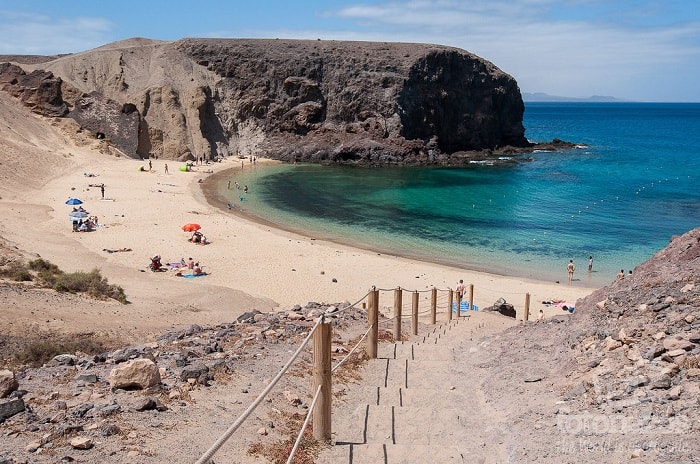
Papagayo is a small beach, barely 120 metres long and 15 metres wide on average. It sits within a shell-shaped cove, sheltered by cliffs that block the wind. This makes it a very calm area with little swell, and one of the reasons to visit Lanzarote.
Within the Los Ajaches Natural Monument
In the southernmost part of Lanzarote lies the Los Ajaches Natural Monument, also known as Punta Papagayo. This is an undeveloped area where human intervention is minimal. For this reason, visiting it means reaching one of the most unspoilt territories on the whole island.
You’ll see the volcanic landscape so characteristic of Lanzarote, along with a series of stunning beaches. Owing to the protection this area enjoys, the only human intervention you’ll come across is the car park, two beach bars and a campsite.
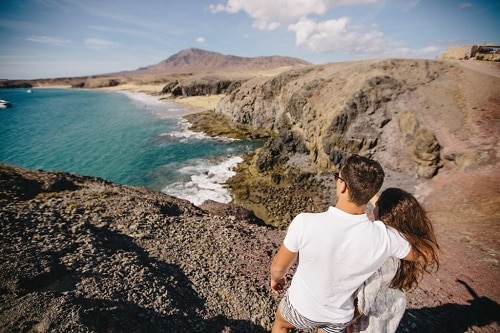
Under the shelter of this natural park lies Papagayo Beach, without doubt one of the most popular beaches on the island, especially among families. But there are also other beaches in the area, and you can walk from one to another. The views on offer are spectacular, so take your time to enjoy this rocky landscape blending with the emerald colour of the water.
Besides Papagayo Beach, there are six other coves and beaches within the park. These are Puerto Muelas, Caleta del Congrio, Playa de la Acera, Playa del Pozo, Playa Mujeres and Calentón de San Marcial. Although surrounded by cliffs, they all have fine sand, which makes your stay on them all the more comfortable.
Crystal-clear waters and golden sand
The feeling of being in an unspoilt setting, the transparent water that takes on an intense emerald tone, and very low swell are the main attractions of Papagayo Beach. A destination that, despite being one of the most popular in Lanzarote, can still be enjoyed without being packed with people.
Thanks to these qualities, it was voted among the best beaches in Spain in 2019, taking the top spot. Papagayo Beach is the best in Spain, according to Condé Nast Traveler readers.
From there, you can enjoy views across to the island of Lobos and Fuerteventura. A few metres away, atop the cliff, sits the Cala Papagayo beach bar, where you can sit under a parasol to eat and drink. It’s an excellent spot to enjoy the sunset from Papagayo Beach.
A protected natural environment
As mentioned at the start, the beach lies within the Los Ajaches Natural Park, an area of great ecological value where both the land and marine environments are protected.
Being a protected environment, it’s essential that you follow the rules — for example, not lighting fires, camping, or removing anything from nature. If you’re going diving or snorkelling, observe the animals from a distance and don’t disturb them.
Also remember to collect your rubbish before leaving the beach and dispose of it in the bins provided.
Camping is not allowed on site.
How to Get to Papagayo Beach
There are several ways to reach Papagayo Beach: by car, on foot, or by boat, and there are even private transfers available directly from the airport. It’s set in a privileged spot — neither too far nor too close to the nearest villages.
From Playa Blanca
The distance between Playa Blanca and Papagayo is very short by car — the journey is approximately 5 to 6.6 km and takes between 15 and 20 minutes. The track is unpaved and bumpy, so you should drive with care.
From Playa Blanca, take the road towards the village of Femés. Along the way, there’s a dirt track that leads to the Los Ajaches Natural Monument.
After covering this stretch, you’ll reach the car park.
From Lanzarote Airport
Booking a private transfer from the airport to Papagayo Beach is entirely viable and safe. The journey is approximately 38 km and takes 45 to 50 minutes to arrive. The first 34 km are on tarmac roads, and the final 4 km are along the dirt track.
Another option is to take a taxi — a convenient choice, though a more expensive one.
By Hire Car
Another way of travelling to Papagayo Beach is to hire a car. This is ideal for those wanting independence, as you can visit several coves. It’s important to always drive carefully on this route.
Organised Excursion
Excursions are convenient and hassle-free — you’re picked up from your hotel, and all transfers and activities are arranged as part of the itinerary, though you won’t have the freedom to drive yourself and move around as you please.
By Boat
If you’d rather not travel overland to Papagayo Beach, you can also view it from the sea. There are boat trips that sail along the cove, allowing you to enjoy it from a different perspective.
On these boat trips, you’ll take in the spectacular volcanic seascape during the crossing, and you’ll avoid the dirt tracks and potholes altogether — though you’ll miss out on the walking trails and will depend entirely on sea conditions.
With the boat anchored off the beach, you can swim and enjoy water sports such as snorkelling or kayaking.
Parking and Access Fee
For parking, the area has two designated car parks: one at Papagayo Beach itself, located at the end of the track with direct access to the main cove, and another at Playa Congrio, to the east of the park, around a 5-minute walk away.
As Papagayo Beach lies within the Los Ajaches Natural Monument, it’s a protected area and access is regulated. The ticket booth for entering the car park operates from 7:00 am to 7:00 pm, and a fee applies. Cars pay €3, motorbikes pay €2, and if you arrive on foot, by bicycle, or are a local resident, there’s no charge.
From there, you simply walk to Papagayo Beach or to any of the other beaches in the area. They’re all very close by, and within a few minutes you’ll be enjoying the beaches.
In summer, owing to the high number of tourists, it’s best to arrive early — between 9:30 am and 10:30 am — to secure a parking space.
Although there’s no direct public transport to this beach, you can take a bus to Playa Blanca, the nearest village to Papagayo. From there, you’ll need to take a taxi or walk (around 5 km) to the beach.
What to Bring to Papagayo Beach
The beach itself remains unspoilt. You won’t find restaurants, sun loungers, or parasols there, nor are there beach bars on several of the beaches. However, there are bins to keep it clean and access for people with reduced mobility.
So you should take precautions before setting off for Papagayo Beach — bring everything you’ll need to enjoy your day at the beach, such as:
- Plenty of water. You can buy it at the Playa Blanca supermarket.
- A parasol for sun protection and a chair to rest on. That said, the surrounding cliffs do offer some natural shade during the hottest parts of the day.
- Enough food and snacks for your time at the beach.
- High-factor sun cream, a hat, and sunglasses.
- Comfortable footwear for walking — the terrain is rocky and uneven.
- Light clothing for the heat and a windbreaker; the weather can turn in the afternoon on these exposed coves.
- Water shoes for swimming, as the seabed in some coves is rocky.
- Snorkelling gear if you’d like to enjoy observing the marine life.
- Plastic bags for collecting rubbish and helping protect the environment.
Activities to Suit All Tastes
This beach has become one of the most popular for family visits. The gentle swell in the area makes it perfect for children to play and enjoy a calm swim. Thanks to its size and the fact that it’s never overly crowded, you’ll always be able to keep an eye on them — though visitor numbers do rise during peak season.
The setting is also ideal for snorkelling and diving, especially if it’s your first time trying either activity. It’s common to see swimmers enjoying the seabed at Papagayo, where you can spot a wide variety of fish, starfish, and other marine species.
You can also go hiking along the paths surrounding Papagayo Beach, exploring both the coastline and the island’s interior.
There was a time when Papagayo Beach was known as a nudist beach. In recent years, however, those practising naturism tend to head to Puerto Muelas and Caleta del Congrio instead.
You can also simply sunbathe on the beach, relaxing on its fine sand, or have a picnic or watch the sunset if you fancy something more laid-back.
The Best Coves at Papagayo: Which One to Choose
The coves at Papagayo share the same unspoilt, rugged, volcanic beauty, but each offers a unique atmosphere and different experience. Their crystal-clear waters and golden sand will make for unforgettable memories.
Papagayo Beach (the Main Cove)
This is the best-known and busiest cove. It’s shell-shaped and shielded by two large cliffs that protect it from strong winds. Its water is turquoise blue and clear. The calm swell makes it feel like a swimming pool, perfect for snorkelling and enjoying the diversity of its marine life.
This is the only cove with a beach bar, perched atop the cliff. Access to the cove is via a fairly steep set of stone steps.
Playa Mujeres
This cove is larger than Papagayo Beach but less crowded. It’s a little windier, as it’s more open to the sea. Its swell is gentle and its waters calm, making it ideal for enjoying with family. Access is easy, very close to the car park. However, it has no restaurants or beach bar facilities.
Playa del Pozo
This is a wild, untouched cove, ideal for those looking to get away from the noise and crowds — it’s quiet and perfect for those seeking a bit of peace. It retains the volcanic scenery, blue waters, and golden sand typical of Papagayo. There are no facilities or buildings nearby whatsoever.
Caleta del Congrio
This is the most secluded cove of them all, with the fewest tourists. It’s ideal for those seeking complete privacy and is the preferred spot for naturists. Its swell and winds are stronger than at the other coves, so caution is advised. The atmosphere here is very relaxed and calm — perfect for enjoying a good book.
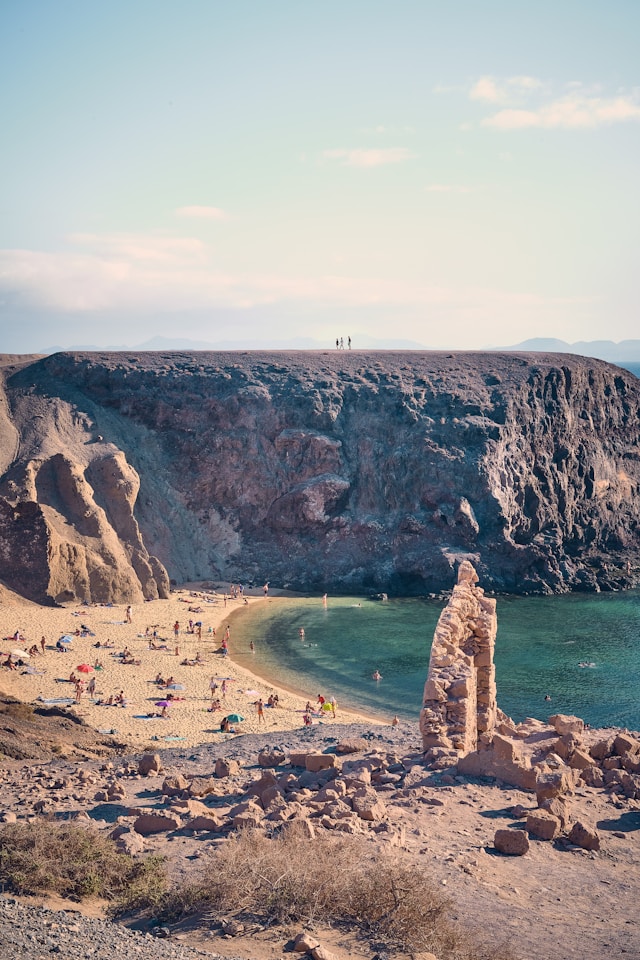 Papagayo Beach is one of the best in Spain, thanks to its unique, peaceful natural setting, far from the hustle and bustle. Don’t miss it on your next visit to Lanzarote! If you’d like to start planning your trip now, get in touch with us.
Frequently Asked Questions
How much does it cost to enter Papagayo Beach?
The cost of entering Papagayo Beach depends on how you arrive. By car, you’ll pay €3; by motorbike, €2; and if you arrive on foot or by bicycle, it’s free.
Can you get there by taxi or transfer?
Yes, you can reach Papagayo Beach by taxi or transfer, although these options are more expensive. It’s important to book in advance and let the service provider know the route, as they’ll need to use a vehicle suited to the terrain.
Which cove is best for children?
For very young children, the best cove is Playa Mujeres — it’s safe, calm, and has plenty of space to play. For children aged around 6 or 7, Papagayo Beach (the main cove) is an excellent choice, as it’s sheltered from both wind and swell.
Can you go snorkelling?
Yes — in fact, Papagayo Beach is one of the best beaches for snorkelling in Lanzarote. Its clear blue waters let you enjoy the wide variety and diversity of its marine life.
What’s the best time of year to visit the beach?
Spring and autumn — that is, between April and June and September and December — are the best months to visit Papagayo Beach. This is because temperatures are more pleasant than in summer, and you’ll encounter fewer tourists.
References:
- https://mochilerosindinero.com/espana/canarias/lanzarote/6340-playa-de-papagayo-como-llegar-tarifa-mapa
- https://es.wikipedia.org/wiki/Playas_de_Papagayo
- https://lamaletainquieta.com/playas-papagayo/
This post is also available in:
Español (Spanish)